
Reading can be a way to spend time with a story, explore an interest or enjoy words on a page. Sometimes it offers a welcome change from what has been occupying your attention.
You might choose a novel, poetry, a comic, a memoir or a book about something you love. Familiar favourites and new discoveries can both have a place.
The choice can fit how you feel today. A short, easy passage may suit a tired evening; something more demanding may be enjoyable when you have energy for it.
Print, ebooks, large print and audiobooks offer different ways to enjoy a book. Choose a format that is comfortable and accessible to you.
You do not need to finish a book or become completely absorbed for the time to be worthwhile. If concentrating is difficult, try something shorter, switch formats or leave it for another time.
Choosing something to read
Start with something you want to spend a little time with. Find a comfortable setting and read or listen at your own pace, without a target for pages or minutes.
- Choose something that suits your mood and energy. Try a familiar favourite, a short story, a comic or a book about an interest. You can put aside anything that feels demanding or upsetting.
- Use a comfortable format. Adjust text size, lighting or how you hold the book. Try large print, an ebook or an audiobook if that makes reading easier to enjoy.
- Make interruptions less likely where practical. Find a suitable place and pause unnecessary notifications. If you read on your phone, open what you want to read before settling in.
- Begin with a manageable amount. Read a few pages, one poem or a short passage. If your attention wanders, return gently, try something else or stop without treating it as a failed attempt.
- Let enjoyment be enough. Reread, skip around or leave a book unfinished if you want to. There is no need to turn leisure reading into a lesson, challenge or list to complete.
Reading can be occasional rather than a daily habit. A few pages may be enjoyable even if you do not become absorbed or finish a chapter.
If you keep losing your place, try a shorter passage, listen instead or leave it for another time. Difficulty concentrating does not mean you are getting nothing from the experience.
Reading for pleasure and reading for support
People use books in different ways: for enjoyment, information, reflection or help with a particular difficulty. These purposes can overlap, but they have different kinds of evidence behind them.
The term bibliotherapy describes using reading as part of support or treatment. It can refer to structured self-help materials or, in some settings, reading and discussing literature.
For example, guided self-help for depression uses structured materials based on approaches such as cognitive behavioural therapy, with support from a trained practitioner. This is different from choosing a novel to enjoy, so its treatment evidence should not be applied to leisure reading generally.
A story, poem or memoir may also give you words for an experience or introduce a perspective you had not considered. You can value that without treating the book as a prescription.
What to expect from a book
Reading may feel restful or absorbing, but there is no reliable number of minutes or pages that will reduce stress by a particular amount.
Small studies have explored short-term changes in stress during reading. They do not establish a predictable effect for everyone, or show that becoming absorbed is necessary for reading to be worthwhile.
Research on fiction has found small average improvements on some tasks involving understanding other people’s thoughts and feelings. Results vary, and this does not mean that reading a novel automatically makes someone more empathetic in everyday life.
Let your response guide the choice. A book can be moving, exciting or unsettling as well as comforting. You can pause, skip a passage or choose something else if the material feels too close to a current difficulty.
If you want company around reading, a library group or reading with someone may appeal. If you prefer quiet time alone, that is equally valid. There is no need to aim for a flow state or turn the experience into journalling unless you want to.
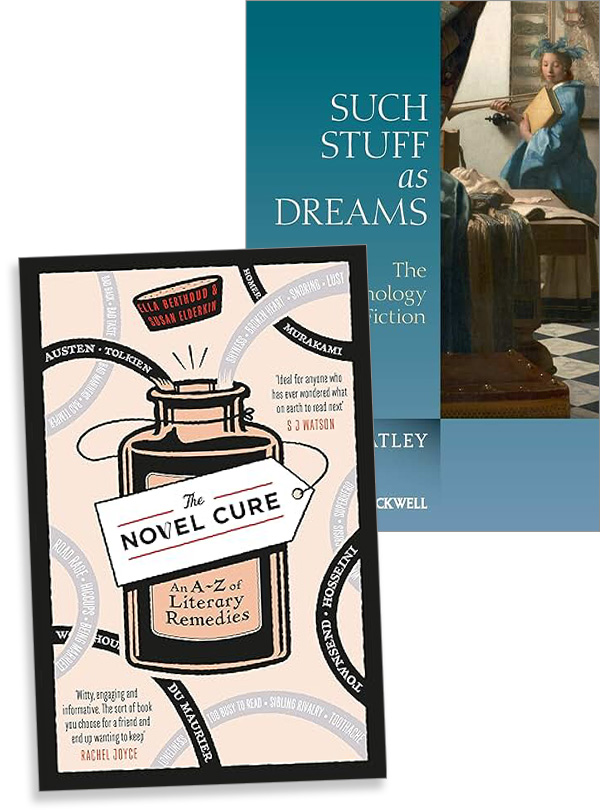
Recommended reading
Ella Berthoud and Susan Elderkin’s The Novel Cure is a playful A–Z of novel recommendations linked to moods and life situations. Browse it for reading ideas rather than treating its literary “remedies” as medical advice.
Keith Oatley’s Such Stuff as Dreams explores the psychology of fiction, including imagination, emotion and how readers engage with characters. It offers a more detailed account of why stories can affect us.