A survey of what human beings have tried, across centuries and cultures, in pursuit of peace of mind – 17 categories, ordered from the well-evidenced to the speculative.

A survey of what human beings have tried, across centuries and cultures, in pursuit of peace of mind – 17 categories, ordered from the well-evidenced to the speculative.
Why a guiding voice often succeeds for exactly the people whom silent practice defeats – and why this isn’t a beginner’s version but simply a different, sometimes better, tool.
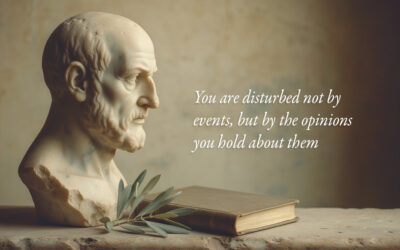
The ancient art of managing your own judgements – you are disturbed not by events, but by your opinions of them. The self-help system modern psychology rebuilt as CBT.
The oldest contemplative practice of all – and the one where the evidence splits most sharply. Intercessory prayer fails the trials; regular practice quietly does not.
A gentle introduction to yoga as a way of settling body and mind – a simple grounding sequence you can do at home, with no flexibility or experience required.
The one calming lever you can always reach – no equipment, no quiet room, no spare half-hour, just a few slow breaths, available in a meeting or a queue.
Working the body hard until the mind goes quiet – the calm of real exertion. Reliable, well-studied, but with one honest catch: harder is not better, and the calm comes after.
Sleep is the floor beneath every other calming practice – and the one state you can’t force. What actually helps, and why trying harder makes it worse.
Redirecting attention from the spiral inside your head to the immediate evidence of your senses. Simple, needs no equipment, and works when distress has already arrived.
A gentle, repeatable way to build a calm interior place you can return to when distress takes hold — used in therapy, and simple enough to practise on your own.
You are not one voice but many. A way of getting on better terms with the anxious, critical, frightened parts of yourself — and the calm centre beneath them.
A body-first way to settle — through sensation, posture and movement rather than thinking your way to calm. Built on the idea that the mind tends to follow the body.
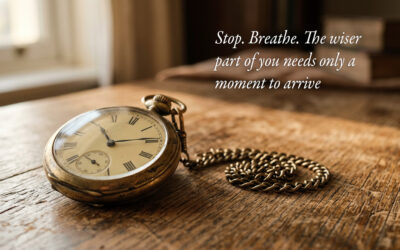
A small, memorable tool for putting a gap between a trigger and your reaction — Stop, Take a breath, Observe, Proceed — so a reflex becomes a choice.
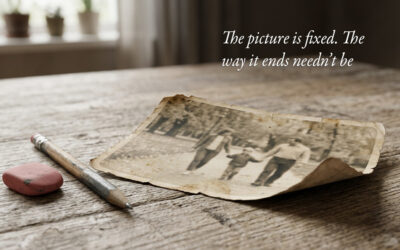
Revisiting a distressing image or recurring nightmare and gently reshaping how it plays out. One of the better-evidenced therapy tools, best worked through with support.
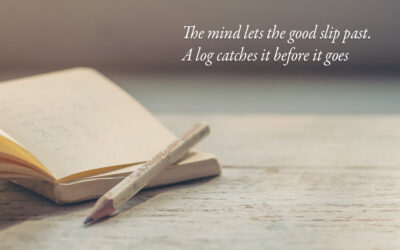
Keeping a written record of the small daily moments that contradict a harsh belief about yourself, until they build into evidence the belief can no longer wave away.
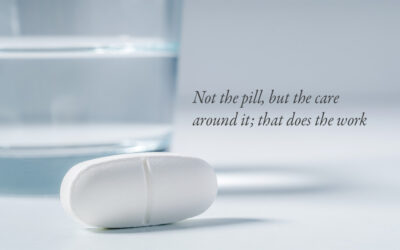
Not all in your head – the placebo effect is one of medicine’s most measured findings. What does the work is the ritual of care around a treatment, not the pill itself.
Thoughts shape feelings more than events do – and you can learn to catch and question them. The most tested talking therapy, and first choice for anxiety and depression.
Rather than fighting a difficult thought, you learn to let it be – and to keep moving toward what matters, even while discomfort is there. Well-evidenced, and freeing.
The evidence isn’t for journalling in general – it’s for particular kinds, done particular ways. Get that right, and writing becomes one of the best things you can do for yourself.
Perhaps the best-evidenced calm of all – time among trees measurably quiets a busy, anxious mind. It cures nothing, but it restores something, nearly every time.
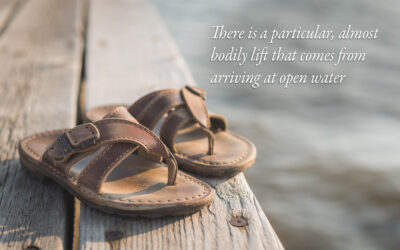
There is a particular, almost bodily lift to open water – a river, a coastline, a lake. Newer research than green space, but the pattern keeps replicating.

Gardening may have a stronger evidence base than meditation or breathing work. Trials link it to lower stress – a visible, growing result, not just stillness.
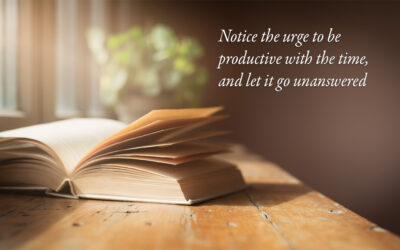
Doing nothing sounds easy – one well-known study found people would rather shock themselves than sit with their thoughts. Yet the idle mind may be doing real work.
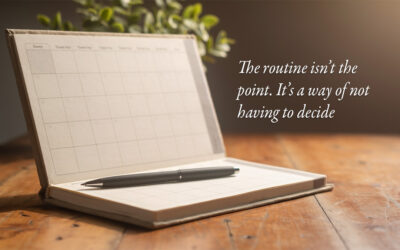
A chaotic day feels worse than a calm one, even when nothing goes wrong. Recent mood research suggests the effect may run wider than we think.
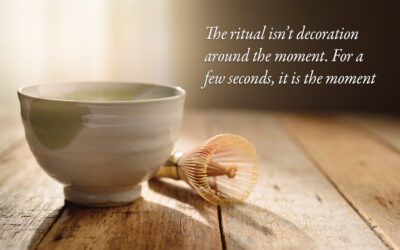
The same cup, made the same way, before the same kind of morning – a small act that does nothing practical, yet seems to change how the moment feels.
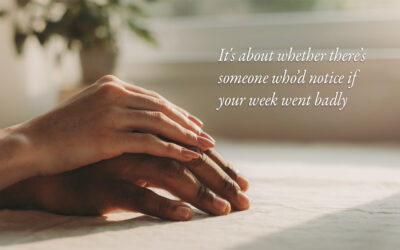
One of the strongest predictors of health and longevity turns out to be the least glamorous: staying in touch with the people who matter, imperfectly, again and again.

Most of what’s on this site works through the mind first. This one skips that step – a hand on an arm can lower a stress response before a word is said.
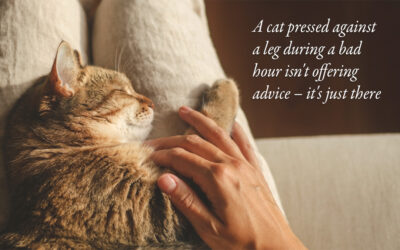
A cat doesn’t ask how you are and wait for the honest answer – just company that asks for care but not conversation, on the days that’s all you can manage.
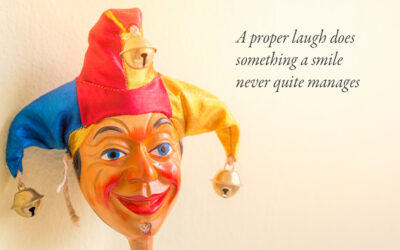
A proper laugh – the kind that catches you off guard – does something a smile never quite manages, loosening the body before the mind’s caught up.
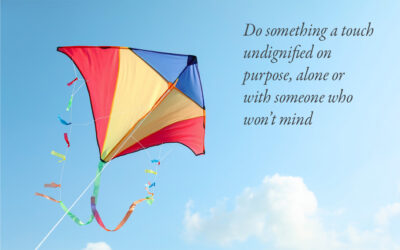
A grown adult being genuinely silly for its own sake looks a little undignified from the outside – which is precisely the tell that it’s actually working.
Ask someone deep in a project what time it is, and there’s a real chance they won’t know – not from inattention, but from paying attention to just one thing.

A good book doesn’t tell you to stop thinking about your own life – it just gives you somewhere else to be, borrowed calm rather than resolution.
A single note can change the temperature of a room before anyone’s said a word – no argument made, just a sound the body answers first.
Most of what unsettles a mind has an object – a deadline, an argument, a diagnosis. This one doesn’t, quite. It sits underneath the others, rarely named.
Most effort assumes the thing being pushed against will eventually give. Acceptance asks what’s left to do once you’ve taken on board that it won’t.
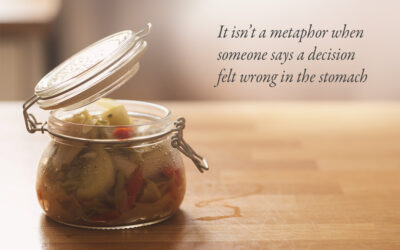
The gut has its own nervous system, wired directly into the same circuits that register mood – so it isn’t a metaphor when a decision “feels wrong” in the stomach.
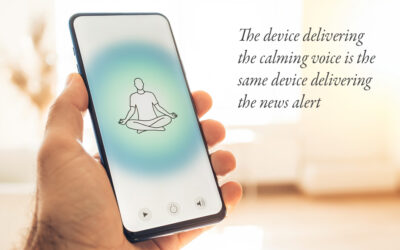
A decade ago, meditation meant a cushion and years of practice. Now it means a phone and a soothing voice – and something got left behind in translation.

A slow, deliberate breath used to be its own reward, with no way to know if it was working. Now a screen can show a heart rate settling in real time.
Total silence sounds like it should be restful. For a lot of anxious minds it’s the opposite – nothing to listen to except the thoughts, at exactly the wrong time of day.
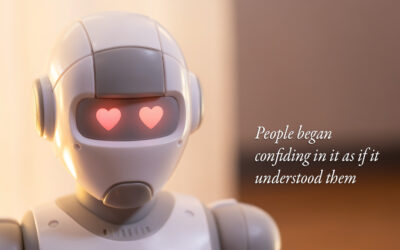
People began confiding in the first chatbot as if it understood them, and refused to believe otherwise – even once the trick was fully explained to them.
A structured breathing exercise doesn’t care what time it is. Neither does an app trying to walk you through one at eleven at night, when the clinic’s long since closed.
People have always talked to things that couldn’t talk back – a diary, a dog, an empty room. What’s new is something that actually answers, and can follow an argument back.
Nothing about a cold shower is relaxing while it’s happening. That’s rather the point – one of the few entries here that works by being unpleasant on purpose.
Traditions with almost nothing else in common – Ramadan, Yom Kippur, Lent – all independently arrived at the same idea: going without food does something to the mind.
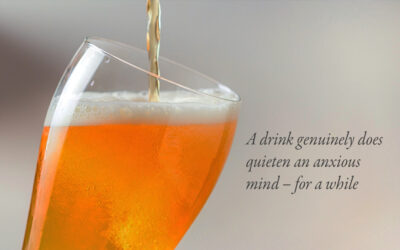
The Odyssey has a word for it – nepenthe, a drug of forgetfulness. People have been reaching for something to take the edge off for a very long time.
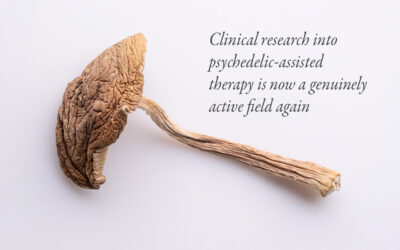
Psilocybin mushrooms turn up in Mesoamerican ritual going back centuries. For most of the twentieth century, Western medicine simply stopped studying any of it.
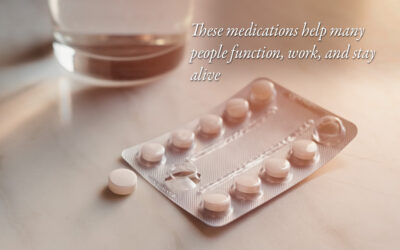
Benzodiazepines arrived in the 1960s promising something safer. SSRIs followed in the 1980s, promising something gentler. Both came with complications.
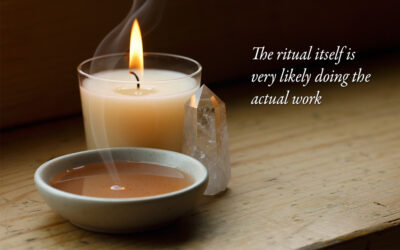
A room full of people, eyes closed, listening to a singing bowl, often leave calmer than they arrived – something genuine is clearly happening.
People have been working out that too much stuff does something to the mind for centuries, long before anyone filmed themselves folding t-shirts.
Near-constant availability has a cost that’s easy to stop noticing – precisely because it arrived so gradually there was never a single moment to object to it.